

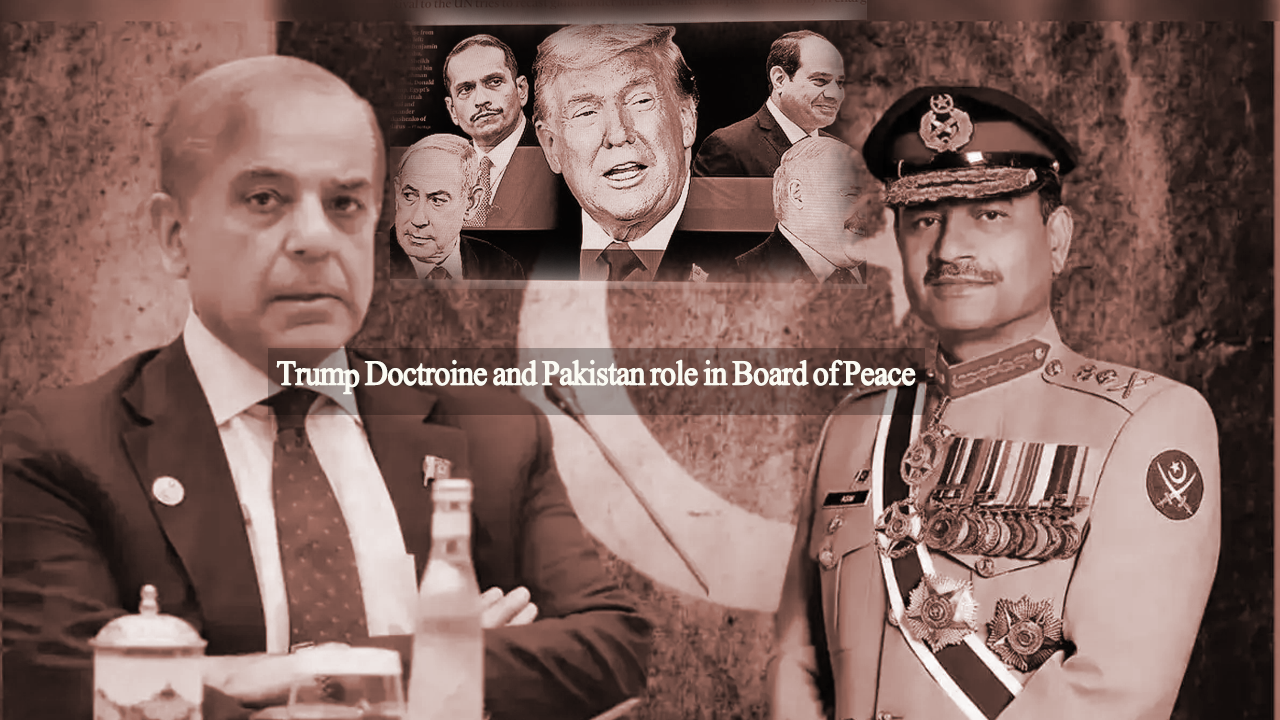
Donald Trump’s so-called “Board of Peace” has rapidly collapsed under global scrutiny, exposing itself not as a peace initiative, but as a geopolitical and commercial project built on war, occupation, and silence. Marketed in the name of Gaza and post-war reconstruction, the initiative excludes Palestinians entirely while placing alleged war criminals, authoritarian regimes, and IMF-dependent states at its core.
Despite being branded as a peace forum, the official charter of the Board of Peace does not even mention Gaza by name. Instead, it outlines vague chapters and articles that quietly shift the focus from ceasefire and justice to control, reconstruction contracts, and strategic influence. No major democratic power has joined. No respected global leader has endorsed it. What remains is a carefully curated club of compromised regimes.
At the center of this plan is Jared Kushner, Trump’s son-in-law, who holds no official government position yet unveiled a detailed redevelopment blueprint for Gaza — complete with housing schemes, industrial zones, ring roads, and commercial hubs. The obvious question remains unanswered: who funds this “peace”? The answer appears to lie with regimes already drowning in debt, political illegitimacy, or international isolation.
Pakistan’s participation is being sold domestically through a familiar military narrative: that Pakistan is “too weak to say no,” that refusal would invite destruction like Iraq, Syria, or Gaza itself. This argument is not new — it has been recycled for decades to justify submission while masking strategic alignment. Behind closed doors, Pakistan’s military leadership has already established a working relationship with Trump’s camp, despite public denials.
Government-aligned journalists have begun amplifying this narrative, insisting Pakistan will neither send troops nor contribute funds. Yet history tells a different story. From Jordan in 1970 to post-9/11 wars across the Muslim world, similar assurances were followed by direct or indirect involvement — always justified later as “necessity.”
The moral contradiction is glaring. While Gaza faced relentless bombardment and children were being killed, Pakistan’s prime minister was finalizing understandings linked to this very initiative. Israel’s leadership, including figures facing international legal scrutiny, could not even attend Davos physically due to fear of arrest — yet they remain central to Trump’s peace board.
Europe, meanwhile, is breaking ranks with Washington. France, the EU, and key European institutions are distancing themselves from Trump’s agenda, drawing closer to China, and reassessing alliances. This shift has serious consequences for Pakistan. Reports now warn that Pakistan’s GSP+ trade status is under real threat, not hypothetically but structurally, due to human rights violations, electoral manipulation, and transnational repression.
The situation worsens domestically. Arrests of journalists and lawyers, including high-profile incidents in Islamabad itself, have reinforced European concerns. Investigations into election rigging and resistance from provincial leadership in Khyber Pakhtunkhwa — particularly over control of mineral resources — have further exposed internal fractures within Pakistan’s power structure.
Trump’s Board of Peace is not about peace. It is about post-war ownership, enforced silence, and the monetization of devastation. Gaza is the test case. Pakistan’s alignment with this project risks not only moral collapse but economic isolation, diplomatic damage, and long-term strategic consequences.
History is watching — and this time, the excuses are wearing thin.
Sabee Kazmi – Writer